SPRUCE High-Resolution Minirhizotrons in an Experimentally-Warmed Peatland Provide an Unprecedented Glimpse at Fine Roots and their Fungal Partners: Supporting Data
Description
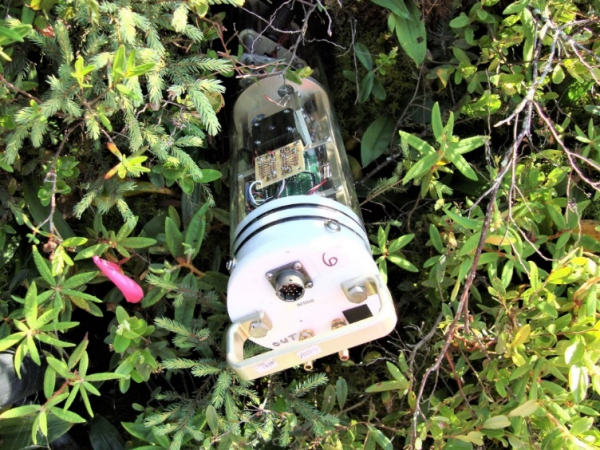
Images were collected using first of their kind, non-destructive, high-resolution automated minirhizotrons (RhizoSystems, LLC) to assess the response of plant fine-root and fungal mycelium dynamics to elevated temperatures after 4-6 years of whole-ecosystem warming and exposure to elevated carbon dioxide concentrations (e[CO2]) in a peat bog where the SPRUCE (Spruce and Peatland Responses Under Changing Environments) experiment is located. We focused on two SPRUCE experimental plots: Plot 10 has elevated temperature (+9°C) and plot 19 is a control (+0°C). Both have elevated CO2 (e[CO2]). Changes in root and fungal abundance with warming were estimated from a timeseries of landscape-level mosaiced images for each plot by measuring the proportional abundance of five belowground classes: fine roots of vascular plants, ectomycorrhizas, fungal hyphae, fungal rhizomorphs, and fungal sporocarps. To examine root and fungal phenology responses to warming, the length per individual root or fungal structure (except fungal hyphae that did not grow linearly but rather increased in areal coverage) were measured per image area of a set of timeseries patch-level mosaiced images for each plot.
The experimental work was conducted in a Picea mariana [black spruce] – Sphagnum spp. bog forest in northern Minnesota, 40 km north of Grand Rapids, in the USDA Forest Service Marcell Experimental Forest (MEF). This ecosystem, which is located at the southern margin of the boreal forest, is considered especially vulnerable to climate change and anticipated to be near its tipping point. These data were used in analyses published in Defrenne et al (2021).
This dataset contains 5 data files in comma-separate values (*.csv) format and a compressed folder (*.zip) containing 383 JPEG (*.jpg) images. Data files contain landscape-level assessment of belowground class abundance, patch-level growth phenology, and environmental variables (originally published in Hanson et al., 2016 and Hanson et al 2020). Images were collected with automated minirhizotrons and analyzed for phenology. Additional metadata are provided: 5 data dictionaries and a file-level metadata file in comma-separate values (.csv) format and a user guide in PDF (*.pdf) format.
Citation
This dataset is available for download at ESS-DIVE, please visit the DOI link in the citation below for access.
Childs J, Defrenne CE, Brice DJ, Woodward J, Holbrook KN, Nettles WR, Taggart M, Iversen CM. 2020. SPRUCE High-Resolution Minirhizotrons in an Experimentally-Warmed Peatland Provide an Unprecedented Glimpse at Fine Roots and their Fungal Partners: Supporting Data. ORNL Terrestrial Ecosystem Science SFA, ESS-DIVE repository. Dataset. https://doi.org/10.25581/spruce.081/1637336
Posted
Wednesday, July 22, 2020
SPRUCE ID: spruce.081
Public
Click image to see full-sized version