SPRUCE: Sphagnum Phytobiome Responses to Whole Ecosystem Warming and Elevated Atmospheric CO2 in July, 2017-2021
Description
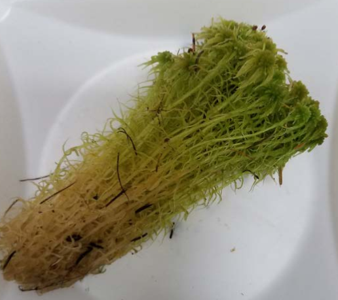
This dataset reports the carbon (C) and nitrogen (N) isotopic composition of Sphagnum moss tissue collected from the Spruce and Peatland Responses Under Changing Environments (SPRUCE) experimental site within the Marcell Experimental Forest in northern Minnesota, USA. Tissues were collected inside the SPRUCE experimental study plot, where air and peat warming are combined in whole-ecosystem warming treatments, from 2019-2021. Additionally, rates of nitrogen fixation and methane oxidation measured for Sphagnum from 2017, 2019, and 2021. Sphagnum tissue % water content was measured at all timepoints. This dataset was used to conduct analyses withinPetro et al (2023).
Sphagnum C and N concentrations and 13C and 15N isotopic natural abundance were determined for three replicate Sphagnum tissue samples collected from inside the SPRUCE enclosures in July 2019-2021. Elemental and isotope analyses were conducted at the University of Georgia – Center for Applied Isotope Studies (CAIS; https://cais.uga.edu/). Plant elemental analysis was performed by the micro-Dumas method, while isotopic natural abundance was measured by isotope ratio mass spectrometry. 13C natural abundance is expressed as the per mille (‰) deviation from the Pee Dee Belemnite standard (PDB) 13C:12C ratio (δ13C), while 15N natural abundance is expressed as the ‰ deviation from the N2 atmospheric 15N:14N ratio (δ15N).
Rates of nitrogen fixation and methane oxidation were measured using serum bottle incubations performed with Sphagnum collected inside the SPRUCE enclosures in July 2017, 2019, and 2021. Rates were calculated according to the amount of 15N-N2 or 13C-CH4 (methane) incorporated into the Sphagnum tissue or incubation headspace over the 48-hour intion period. In 2017, incubations were performed in growth chambers set to the temperature of the experimental plots during Sphagnum sampling. In 2019 and 2021, the incubations were performed directly inside the experimental plots. The 13C and 15N isotopic natural abundance data and rate measurements presented in this dataset provide insight into the impacts of whole-ecosystem warming and elevated atmospheric carbon dioxide (CO2) on N and C cycling within the Sphagnum phytobiome.
This dataset contains two data files in comma-separate values (*.csv) format. Additional metadata are provided: two data dictionaries and a file-level metadata file in comma-separate values (.csv) format and a user guide in PDF (*.pdf) format. Additional datasets on NH4-N availability, porewater concentrations of CH4 and CO2, and Sphagnum groundcover within the SPRUCE experimental plots are available. These are outlined in the Related Datasets section in the user guide.
Citation
This dataset is available for download at ESS-DIVE, please visit the DOI link in the citation below for access.
Petro, C, A Carrell, RM Wilson, K Duchesneau, S Noble-Kuchera, T Song, CM Iversen, J Childs, G Schwaner, J Chanton, RJ Norby, PJ Hanson, JB Glass, D Weston, JE Kostka. 2023. SPRUCE Sphagnum Phytobiome Responses to Whole Ecosystem Warming and Elevated Atmospheric CO2 in July, 2017-2021. ORNL Terrestrial Ecosystem Science SFA, ESS-DIVE repository. Dataset. https://doi.org/10.25581/spruce.105/1924666
Posted
Friday, February 17, 2023
SPRUCE ID: spruce.105
Public